What an IBT Online HubSpot Marketing Program Looks Like (and Why It Works)
If you’re reading this, you’re likely in the consideration stage: you want HubSpot to generate predictable pipeline and clearer reporting, but you also know that simply “having HubSpot” isn’t the same as running it as a revenue engine.
That’s why we created this 4-part IBT Online HubSpot Marketing Series, designed to support the buyer journey from awareness to decision. (If you missed it, Blog 1 introduces the HubSpot Gap, the difference between owning HubSpot and using it optimally to drive revenue.)
This post makes it concrete: what you should expect a managed HubSpot program to include, and why those elements are what turns HubSpot into measurable growth.
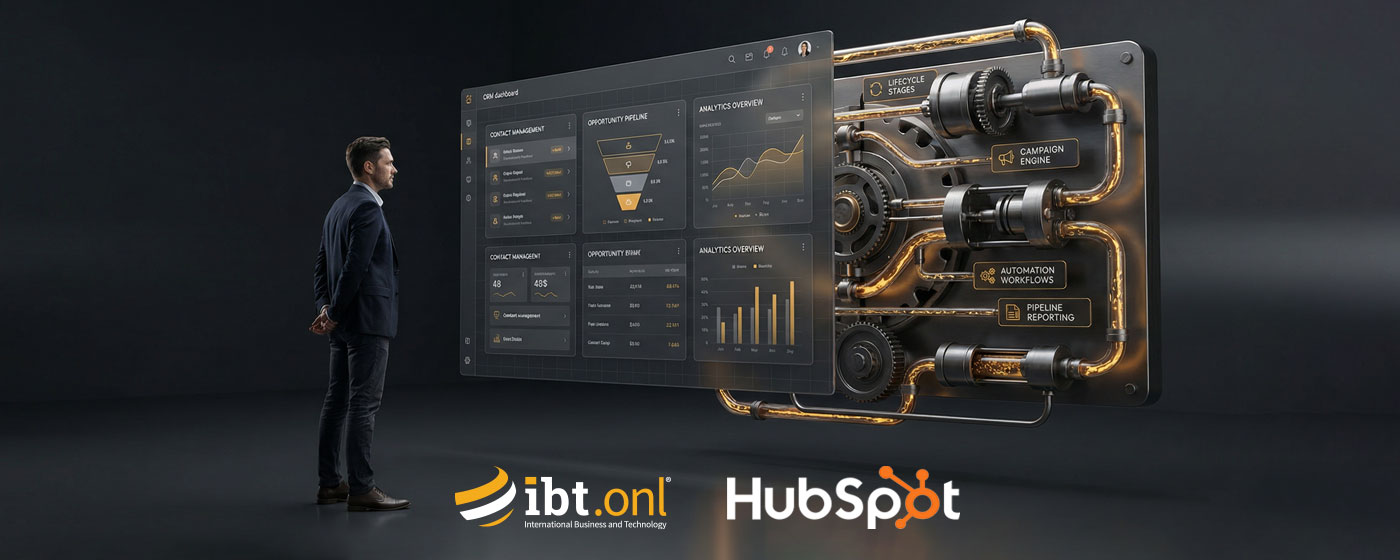
An IBT Online HubSpot Marketing Program is a managed operating cadence that aligns lifecycle and handoffs, executes repeatable campaigns, builds automation, and reports performance tied to pipeline.
What “managed” really means
A managed HubSpot program is not occasional help, random campaigns, or one-time setup.
A managed program is ownership of an operating cadence so the work gets done consistently, improves over time, and is measured in outcomes that matter (SQLs, pipeline, revenue), not just marketing activity.
That’s the intent behind IBT Online HubSpot Marketing Programs: to close the HubSpot Gap with structured execution.
The 4 components you should expect in an IBT Online HubSpot Marketing Program
1) Foundation: make HubSpot operational and trustworthy
Before campaigns scale, the portal needs a clean operating foundation:
- Lifecycle definitions (Lead → MQL → SQL → Opportunity) your teams will actually follow
- Handoffs and routing (who owns what, and what happens next)
- Segmentation readiness (properties/lists that support targeting and personalization)
- Tracking + attribution baseline so reporting is credible
Why this matters: if lifecycle and handoffs are unclear, it’s hard to improve conversion rates and impossible to trust performance reporting.
2) Execution: a repeatable campaign engine (not one-off activity)
High-performing teams don’t “do marketing.” They run a campaign system.
A repeatable HubSpot campaign pattern looks like this:
offer → landing page → form → follow-up → nurture → sales handoff → reporting
In a managed program, you should expect:
- consistent end-to-end campaign builds
- conversion-focused landing pages and forms
- email sequences that support a buyer path (not generic blasts)
- ongoing optimization (message testing + funnel drop-off fixes)
Why this matters: HubSpot becomes a revenue engine when campaigns are executed as a repeatable process, not as occasional projects.
3) Automation: turn interest into sales conversations
Automation is where HubSpot either becomes a growth multiplier, or stays underutilized.
A strong managed program typically includes:
- stage-based nurture that matches the buyer journey
- re-engagement for leads that stall in evaluation
- handoff workflows that give sales context and timing
- lead recycling paths so “not ready” doesn’t become “lost forever”
Why this matters: automation creates consistency, speed-to-lead, and better qualification, so sales gets better conversations.
4) Reporting: tie work to pipeline (not just clicks)
Consideration-stage buyers want proof. A managed program should produce reporting that answers:
- What is driving SQLs and pipeline (not just opens and clicks)?
- Where are leads dropping off (conversion rate, MQL→SQL, follow-up speed)?
- Which campaigns are producing measurable downstream outcomes?
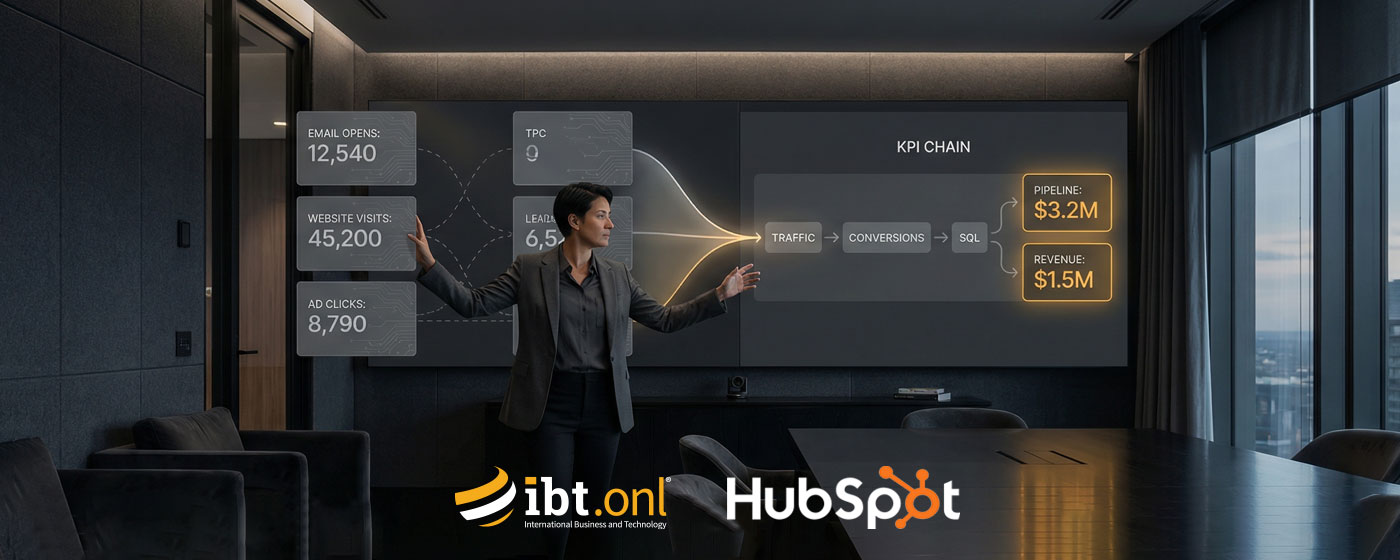
A simple KPI chain looks like:
traffic → conversions → SQL → pipeline → revenue
Why this matters: you can’t scale what you can’t measure, and you can’t justify investment with activity metrics alone.
Where to go deeper
If you want a deeper view into how HubSpot supports lead generation, sales alignment, and scalable growth, two resources in this series are especially relevant:
- Webinar: HubSpot for Global Growth: Automating Leads, Sales, and Market Expansion (useful even if your immediate focus is the U.S. – it’s fundamentally about automating leads and sales process in HubSpot). Get in touch to learn more.
- Series blog: HubSpot + IBT Online | Smarter Global Sales & Marketing (IBT Online’s HubSpot partnership and how we help companies leverage HubSpot effectively).
FAQ
What is an IBT Online HubSpot Marketing Program?
It’s a managed operating cadence that aligns lifecycle and handoffs, executes repeatable campaigns, builds automation, and provides reporting tied to pipeline so HubSpot drives measurable growth.
What should I expect in the first 60–90 days?
Lifecycle/handoff clarity, campaigns shipped end-to-end, segmented nurture automation, and dashboards that show what’s driving SQLs and pipeline, plus a consistent optimization cadence.
How do I evaluate a HubSpot services provider?
Look for outcome ownership, repeatable campaign execution, strong automation capability, and reporting that connects work to SQLs, pipeline, and revenue.
If you’re considering managed HubSpot services and want a clear, practical view of what to fix first, get in touch with IBT Online to discuss an IBT Online HubSpot Gap Review, the benefits for your business, and to learn more about our IBT Online HubSpot Marketing Programs.
IBT Online Is a Certified HubSpot Partner
Implementing HubSpot Solutions for over 10 years as a certified HubSpot CRM implementation partner
Explore IBT Online’s HubSpot Marketing Series
Blogs
- AI Visibility & GEO (8)
- All posts (106)
- Avatars & Videos (6)
- Digital Marketing (59)
- Distributors, Resellers, & Agents (10)
- Ecommerce Solutions (16)
- FAQ (1)
- HubSpot (5)
- Localization (42)
- Market Insights (52)
- Success Stories (16)
- Website Design & Development (18)